
VISIT | EXHIBITION
No-Man’s-Land
No-Man’s-Land
Exhibition NOTES
No-Man’s-Land
No-Man’s-Land | August 13 – November 8, 2026
Opening Reception Thursday, August 13th – 5:30 PM
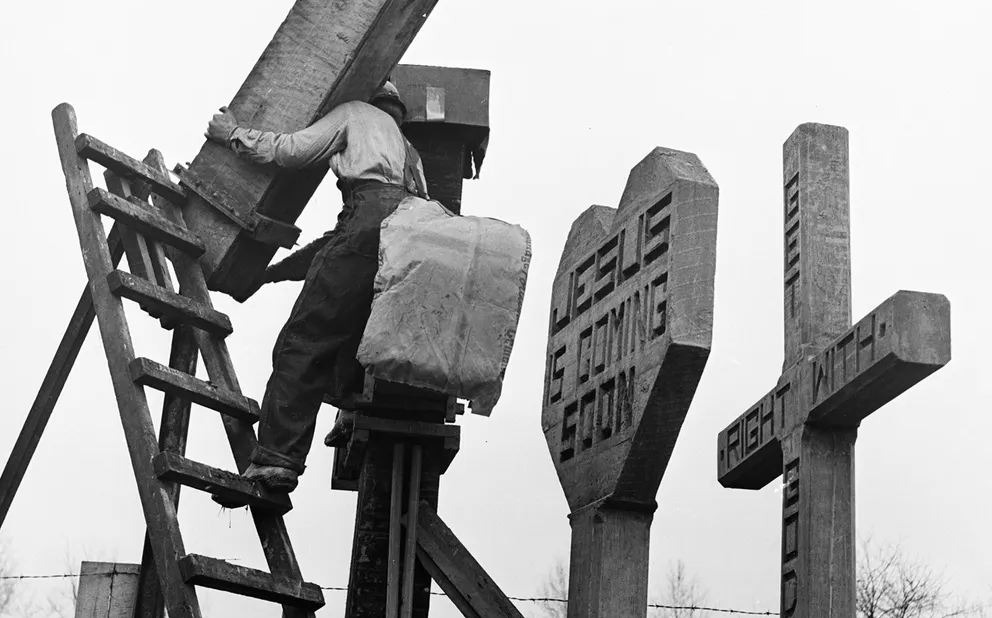
Inspired by the visionary work of Kentucky coal-miner-turned-evangelist Harrison Mayes after he experienced a life-changing epiphany, No-Man’s-Land explores genres, beings, and geographies that exceed singular definition. Born in Tennessee in 1898, Mayes’ placed concrete beacons across the country, with plans for them to reach outer space, and beyond. He installed these markers in so-called “no-man’s-land”—narrow, ambiguous strips of land between state and private property where no one authority could claim jurisdiction.
This exhibition looks to artists who work in similarly uncharted territory. Bringing together contemporary practices that move through the borderlands between bodies, spiritual traditions, cultures, countries, and planets, No-Man’s-Land considers how art inhabits and transforms these thresholds, envisioning new ways of being in the spaces between.
Featured Artists (alphabetically):
- Seba Calfuqueo
- Ada Friedman
- Guillermo Galindo
- Eddie Owens Martin (St. EOM)
- Harrison Mayes
- Erin Jane Nelson
- Sarah M. Rodriguez
- Suzanne Treister
- Saya Woolfalk
- Joseph Elmer Yoakum
*See below for Artist’s Bios




This exhibition is made possible thanks to the generous support of our sponsors:
McCarty, Holsaple, McCarty Architects, Inc., Vicki S. Kinser & John Jarnagin, Debbie & Jimmy Jones, and Susan French
Meet the Artist(s)
Seba Calfuqueo
(Santiago, Chile 1993; lives and works in Santiago)
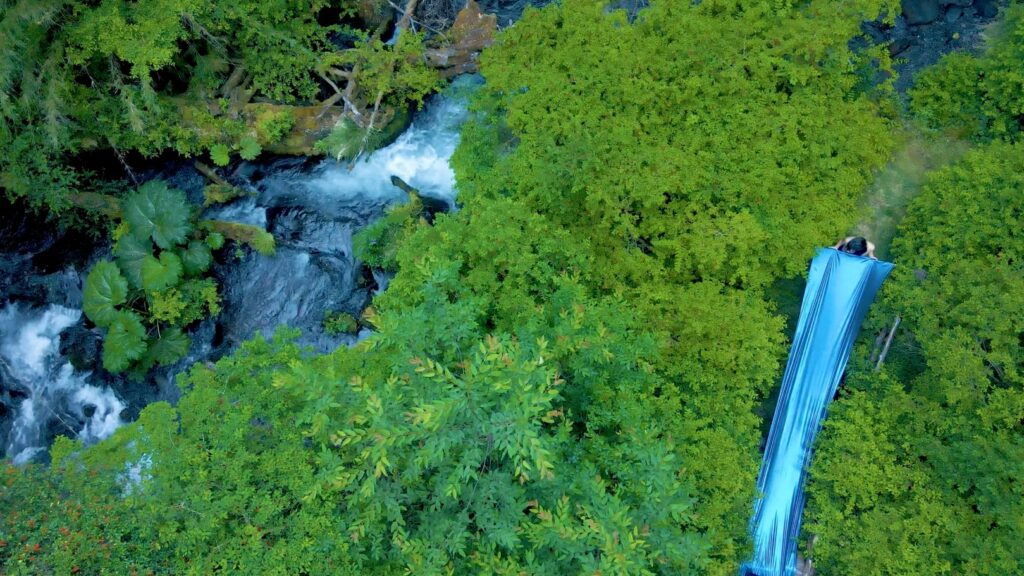
Sebastiana (Seba) Calfuqueo (she/they, Santiago de Chile, 1991) is a Mapuche trans artist and curator at Espacio218, Santiago de Chile.
She is a member of the Mapuche collective Rangiñtulewfü and of Revista Yene.
Through her work, Calfuqueo draws on her cultural heritage and lived experience as a starting point to propose a critical reflection on the social, cultural, and political dynamics that shape the Mapuche subject within contemporary Chilean and Latin American society. Her artistic practice unfolds through performance, installation, ceramics, and video, in order to examine both the similarities and the frictions between Indigenous worldviews and Western thought, as well as the stereotypes that emerge from these intersections. At the same time, her work confronts colonial impositions through research and a thoughtful use of visual techniques and strategies. Calfuqueo’s practice also engages with themes such as feminism, gender studies, and environmental rights, from a First Nations perspective grounded in embodied knowledge.
In relation to environmental rights, Calfuqueo seeks to contribute a contemporary reflection on the relationships between humans and what we understand as nature, creating a space for rupture where these two concepts can be understood as coexisting. Her work aims to dismantle the anthropocentric view of landscape as something humans inhabit or exploit, encouraging viewers to rethink the imposed relationships we construct with nature.
Her work is part of the collections of the TATE Modern (United Kingdom), Centre Pompidou (France), Denver Art Museum (USA), Museo MALBA (Argentina), Museo Thyssen-Bornemisza (Spain), KADIST Collection (France), Museu de Arte Contemporânea do Rio Grande do Sul – MAC RS (Brazil), Museo Nacional de Bellas Artes (Chile), and MAC (Chile).
Calfuqueo has participated as an invited artist in the Venice Biennale (2024), the Whitney Biennial (2024), the 34th Bienal de São Paulo (2021), the 12th Bienal de Mercosur (2020), and the 22nd Bienal Paiz (2020).
She has received awards from the FAVA Foundation (2018), Eyebeam’s Fractal Fellowships Program (2020), Fundación Ama Amoedo’s FAARA (2023), and the Cuervo Prize at Zona Maco (2024).
Ada Friedman
(Washington, D.C. , 1984; lives and works in the Texas Hill Country & Brooklyn, New York)
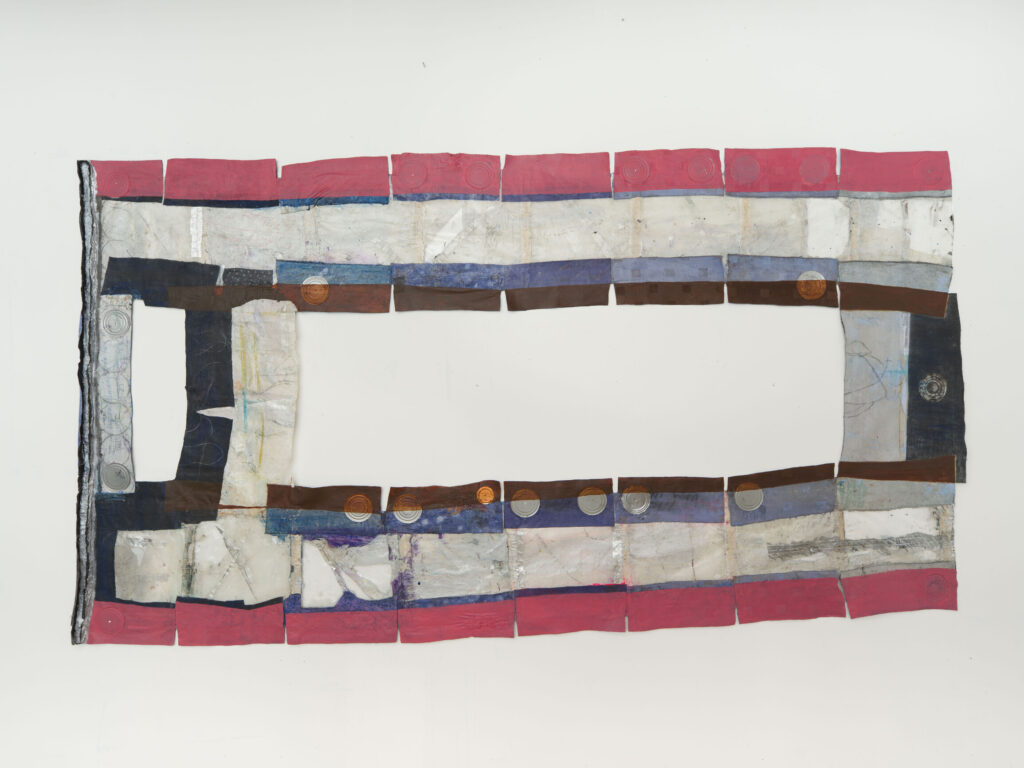
Ada Friedman’s art is rooted in paint, routine, and ritual. Her paintings exist in different fields of action and poetry; of varying spaces of concreteness, collaboration, and interiority. Works are typically double-sided; each side contains a painting unto itself which combines with its verso into a multifaceted whole. Moved by the artist’s holistic drive to conjure worlds, her approach to the medium transforms paper - her prima materia - and discreet collections of idiosyncratic materials into symphonic accord for adventurous, graceful paintings.
She has recently been awarded the Grant Wood fellowship and a Visiting Professorship in Painting and Drawing at the University of Iowa, 2025-26, and she was also recently appointed Visiting Artist in Painting and Drawing at the University of Tennessee, Knoxville in 2021-22. She has participated in institutional exhibitions at Kunsthalle Zürich (Zürich, Switzerland); University of Pennsylvania (Philadelphia, USA); Socrates Sculpture Park (Queens, USA); and The University of Tennessee Downtown Gallery, Knoxville, TN.
Her work was recently featured in a group exhibition, September, at Shore Gallery in Vienna, curated by Kunsthalle Zürich curator Otto Bonnen. The show is part of the city of Vienna's noted, sixteenth annual 'Curated By' art gallery festival.
She and her work have been featured in BOMB magazine, Brooklyn Rail, Family Time, ARTnews, Hyperallergic, Painter’s Bread, BMore Art, and more. Friedman’s artist book, Drawing Hilma Af Klint, made in collaboration with artists Ariel Dill and Denise Schatz, was published by Miniature Garden (2014; second edition 2019). She has had recent solo exhibitions at exhibitions at Kendra Jayne Patrick (Bern, CH) and David Peter Francis (New York City, USA), and has been included in group exhibitions at Nature of Things (Dallas, TX) Cleopatra’s (Brooklyn, USA); Safe Gallery (Brooklyn, USA); Ortega y Gasset (Brooklyn, USA); Grifter (New York City, USA); White Columns (New York City, USA); Night Gallery (Los Angeles, USA), among others. She presented a solo presentation at Art Basel Miami Beach in 2023, an acclaimed two-person presentation at Independent 2025, and was featured in The Living Room, a special curated selection of art and artists at Art Genève 2023.
Guillermo Galindo
(Mexico City, Mexico 1960; lives and works in San Francisco, California)
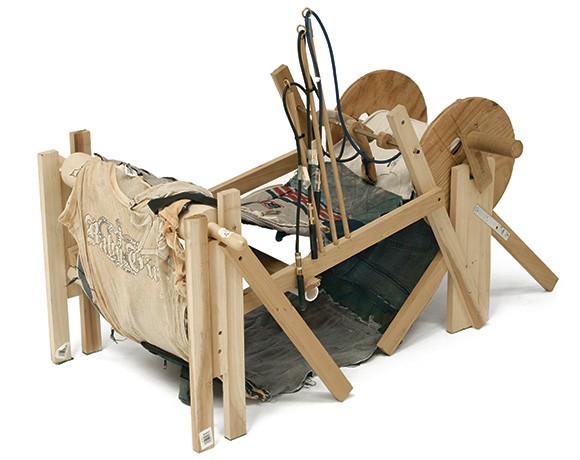
Born in Mexico City and based in the United States, Guillermo Galindo has spent decades exploring the relationship between sound, memory, and movement across borders. Since 2011, he has created a growing body of sculptural instruments from objects found in the borderlands: shoes, clothing, water bottles, children’s toys, fragments of fencing, and other items left behind during migration.
In Galindo’s sculptures, personal belongings become instruments. A worn shoe sprouts a carved wooden neck. Shirts and denim are stretched across a handmade frame. Constructed from materials recovered along the U.S.–Mexico border, Ropófono and Zapatófono transform everyday objects into resonant bodies.
Many of these instruments are activated through performance - using contact microphones to draw sound from within their materials. Sound becomes a way of attending to what remains, channeling those who once used or inhabited the items. Through amplification, these belongings become audible records of physical passage, memory, and spiritual transition.
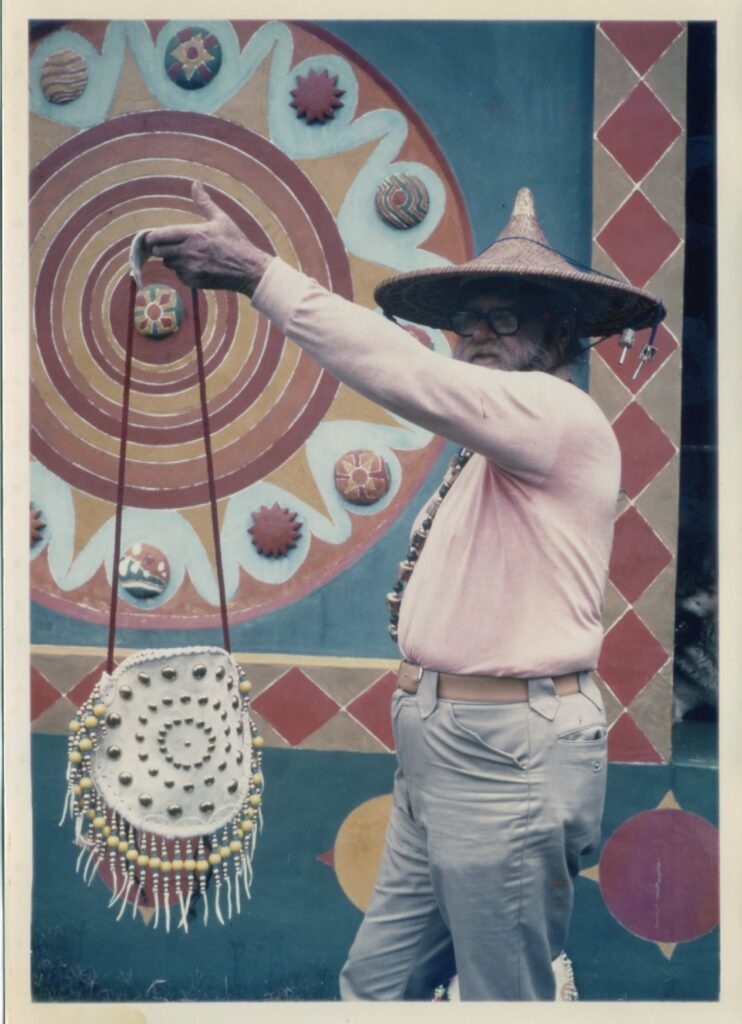
Eddie Owens Martin (St. EOM)
(Marion County, Georgia 1908-1986 Buena Vista, Georgia)
Eddie Owens Martin, also known as St. EOM, was a self-taught artist and visionary creator of Pasaquan. Born in 1908 in Marion County, Georgia, he had a turbulent early life, which included a stint as a fortune teller and a hustler in New York City. In the 1930s, St. EOM underwent a profound transformation, adopting the persona of St. EOM and in 1956 he began the ambitious project of constructing Pasaquan. He blended a rich tapestry of influences, including African, Native American, and Eastern spirituality, to craft a spiritual oasis. Pasaquan became his life’s work, a sanctuary of vibrant colors, intricate patterns, and symbolism. St. EOM’s art was deeply rooted in a personal spiritual journey, and he saw himself as a “Pasaquoyan,” creating his own religion centered around his art. His remarkable vision, dedication, and self-expression left an indelible mark on the world of outsider art. St. EOM passed away in 1986, leaving Pasaquan as a testament to his unique creative genius.
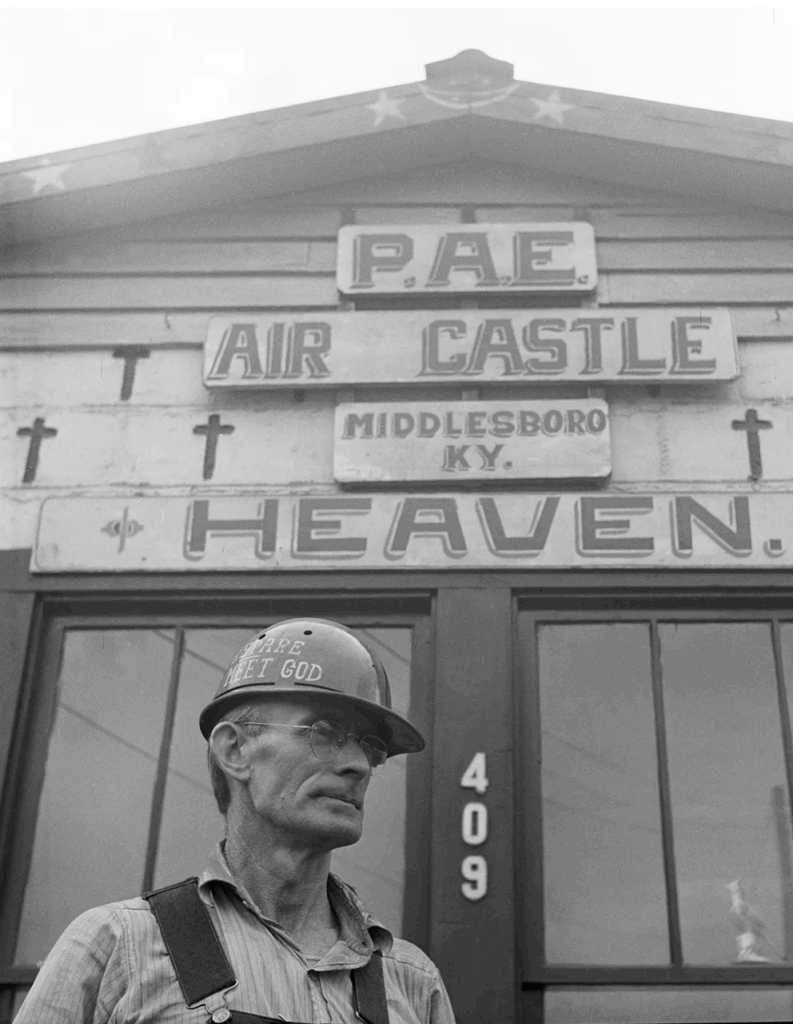
Harrison Mayes
(Goin, Tennessee 1898–1986 Middlesboro, Kentucky)
For more than sixty years, Harrison Mayes placed signs along roadsides, in vacant lots, on hillsides, and in the narrow strips of land between public roads and private property. Made from concrete cast in handmade molds at his cross-shaped home in Middlesboro, Kentucky, these markers pronounced spirited declarations such as: “GET RIGHT WITH GOD,” “PREPARE TO MEET GOD,” and “JESUS IS COMING SOON.”
Mayes began making signs after surviving a near-fatal mining accident as a child. What started as painted messages on scraps of wood became a lifelong project that spread across the United States and beyond. During the summer months, he traveled the country’s highways searching for places to install them. Mayes often called these sites “no-man’s-land,” spaces that belonged neither fully to the road nor to adjacent private property.
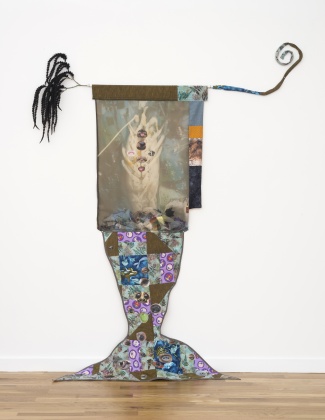
Erin Jane Nelson
(Neenah, Wisconsin 1989; lives and works in Santa Fe, New Mexico)
Erin Jane Nelson creates multidisciplinary works rooted in photography, drawing from a personal archive of found and original images. Working in series, each project explores distinct conceptual themes—from climate anxiety and the intelligence of octopuses to the science fiction of contemporary life. Nelson combines photographic imagery with ceramics, found textiles, collage, and natural dyeing techniques, allowing the colors and traces of plants and insects to become integral to her work. By layering these materials onto unexpected structures, she creates works that reflect the tension, humor, uncertainty, and interconnectedness of the present moment. As part of a generation of artists working beyond New York, Nelson's practice engages the intersections of art, craft, ecology, and systems of belief.
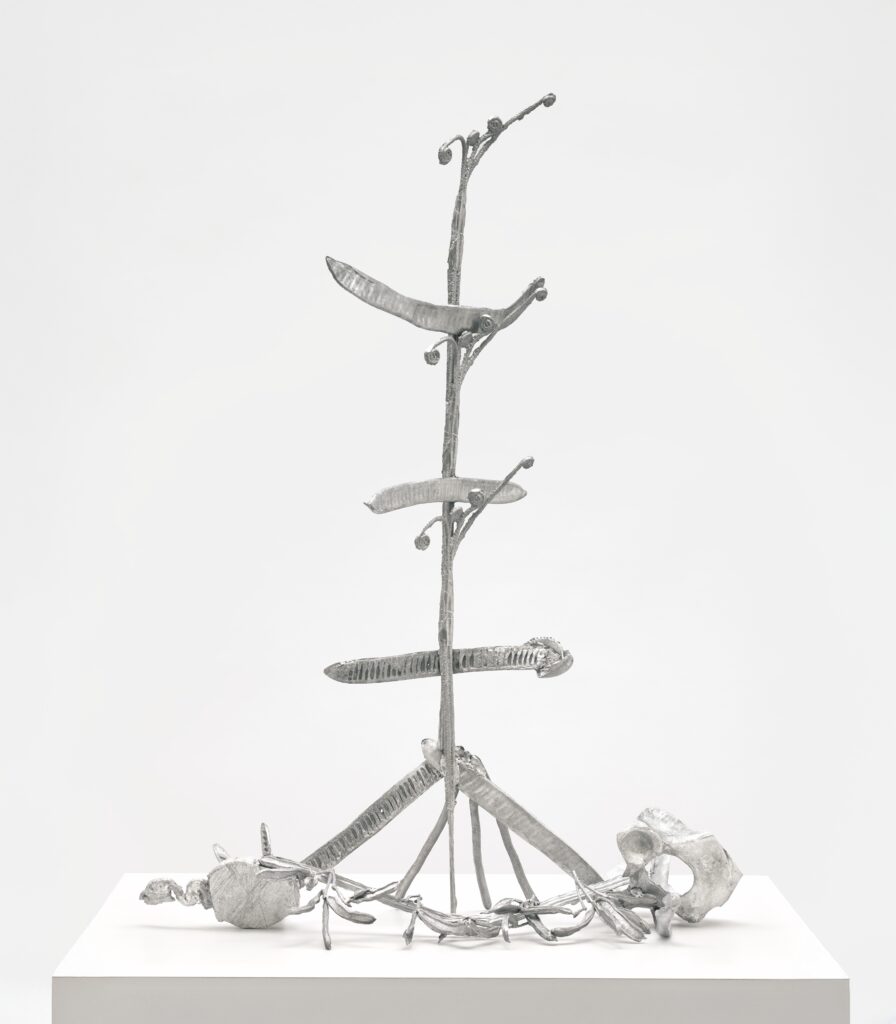
Sarah M. Rodriguez
(Honolulu, Hawaii 1984; lives and works in Ojo Caliente, New Mexico)
Sarah M. Rodriguez works with forms gathered from the natural world: seed pods, branches, shells, bones, and other organic materials. During the casting process, these materials are pressed into sand and burned away, leaving cavities that are filled with molten aluminum. The finished sculptures carry the textures of the original materials, even as they become something harder to place.
Across these works, familiar forms lean, branch, loop, and balance against one another. A seed pod becomes a counterweight. A branch becomes a limb, antenna, support, or path. Thin stems rise from heavier bases, while delicate arcs extend outward, holding space around them.
Trained in animal behavior, Rodriguez is attentive to how living things navigate changing environments. Her sculptures carry that sense of adaptation into metal, where once-fragile materials become durable without becoming fixed. They find balance through pressure, contact, and the space around them.
Suzanne Treister
(London, UK 1958; lives and works in London)
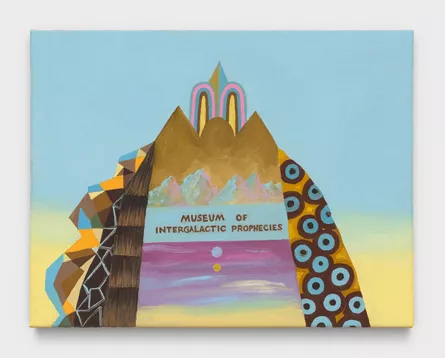
For more than three decades, Suzanne Treister has drawn connections between esoteric traditions, scientific inquiry, ecology, and speculative fiction. Many of these works draw upon Kabbalah, particularly the Tree of Life: a diagram used to map relationships between different states of being and consciousness.
Treister imagines places for things that are difficult to contain: cosmic dust, augmented telepathy, interplanetary botany, and the inaudible sounds of asteroids translated into data. In her paintings and drawings, these ideas acquire bodies, buildings, and instruments of transmission. Fields of saturated color hold signs, symbols, diagrams, and structures that seem tuned to information arriving from beyond the visible world.
These works are neither predictions nor blueprints. They function more like observatories, offering vantage points onto worlds still taking shape. Treister charts territories where ancient systems meet future technologies, and where knowledge moves between the earthly, the spiritual, and the cosmic. For Treister, the unknown is not an absence of meaning, but a field of continual discovery.
Saya Woolfalk
(Gifu City, Japan 1979; lives and works in New York City, New York)
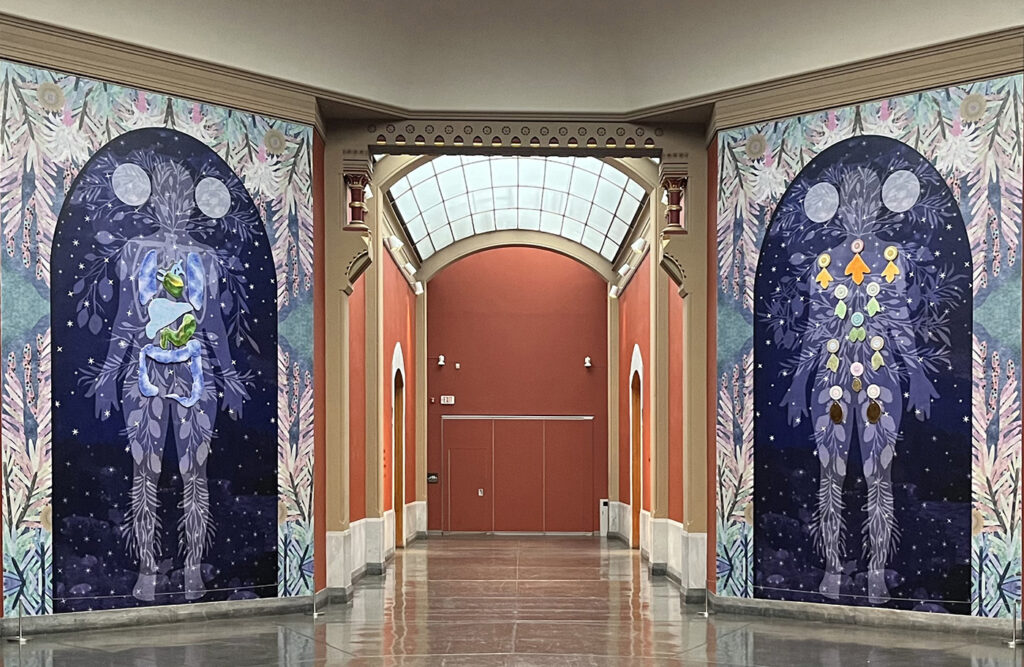
Saya Woolfalk’s Empathics series imagines a fictional race of women who can alter their genetic makeup and merge with plants. Across videos, sculptures, textiles, installations, and patterned environments, Woolfalk builds a visual language for these beings whose identities are continually in transformation.
In this fluid arena, a site-specific vinyl turns the gallery wall into a speculative landscape. Pattern, figure, plant life, and anatomy gather around a central opening, making the wall feel like a place of passage. The image does not separate body from environment. It treats transformation as a condition of being alive.
Placed in front of this environment, the glass bones take on the feeling of a reliquary. They carry the charge of remains from a body still becoming. Together, the vinyl and bones bring science into contact with ritual, holding the body as specimen and sacred presence. In Woolfalk’s work, transformation is not a loss of self. It is a way of becoming more deeply connected.
Joseph Elmer Yoakum
(Ash Grove, Missouri 1890- 1972 Chicago, Illinois)
Joseph E Yoakum began drawing at the age of seventy-one, following what he described as a spiritual awakening. Over the final decade of his life, Yoakum produced more than 2,000 works that “arrived” to him with remarkable clarity, as though revealed, rather than crafted.
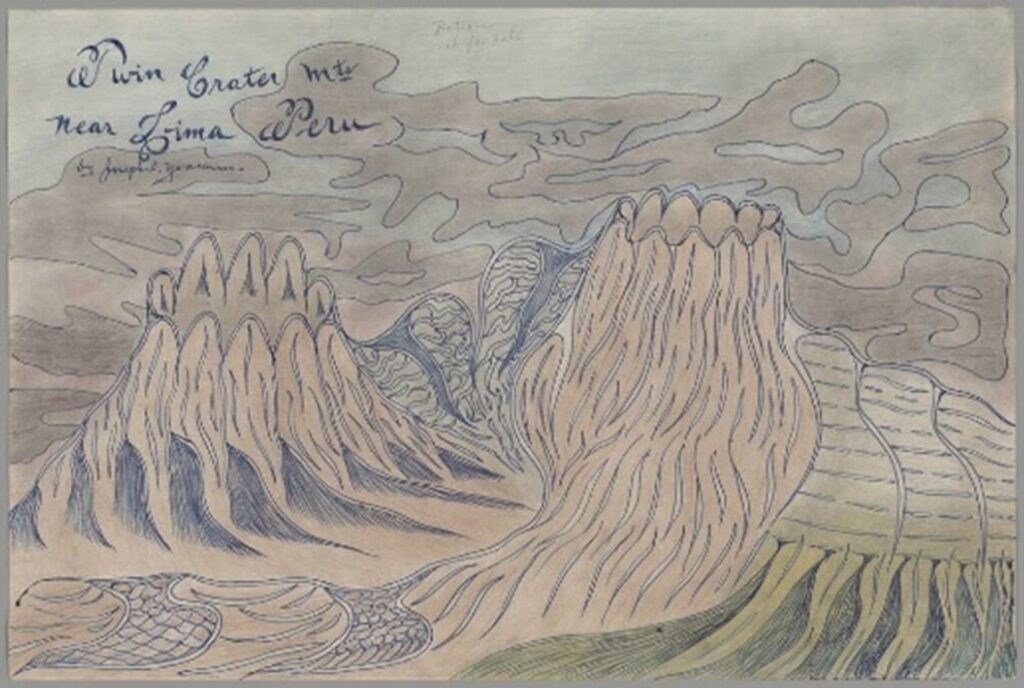
Yoakum’s drawings always seem to be in motion. Having spent much of his life traveling by train, Yoakum experienced landscape as a sequence of shifting views glimpsed through a window. What emerges is a world remembered while moving through it.
Mountains ripple across the page. Rivers wind through deep valleys. Roads disappear behind ridges and emerge again in the distance. Yoakum identified these drawings with place names- inscribing locations from Tennessee and Mexico to Sweden and Antarctica –but the places he depicted rarely conform to conventional geography. Instead, this psycho-geography unfolds according to its own logic; where memory, imagination, and observation are difficult to separate.
Thank you to our sponsors